Table of Contents
Introduction
The HashiCorp Terraform Associate certification validates your knowledge of infrastructure as code concepts and Terraform skills. This study guide covers everything you need to pass the exam on your first attempt.
Exam Overview
- Duration: 60 minutes
- Questions: ~57 multiple choice and multi-select
- Passing Score: ~70%
- Cost: $70.50 USD
- Validity: 2 years
- Format: Online proctored
Exam Objectives
1. Understand Infrastructure as Code (IaC) Concepts
- Explain what IaC is
- Describe advantages of IaC patterns
- Understand Terraform’s purpose vs other IaC tools
2. Understand the Purpose of Terraform (vs Other IaC)
- Explain multi-cloud and provider-agnostic benefits
- Explain the benefits of state
3. Understand Terraform Basics
- Install and version Terraform providers
- Describe plugin-based architecture
- Write Terraform configuration using multiple providers
- Describe how Terraform finds and fetches providers
4. Use Terraform Outside Core Workflow
- Describe when to use
terraform import - Use
terraform stateto manage resources - Describe when to enable verbose logging
- Describe the
terraform taintcommand (deprecated)
5. Interact with Terraform Modules
- Contrast and use different module sources
- Interact with module inputs and outputs
- Describe variable scope within modules
- Set module version
6. Use the Core Terraform Workflow
- Describe Terraform workflow (Write → Plan → Apply)
- Initialize a Terraform working directory
- Validate a Terraform configuration
- Generate and review an execution plan
- Execute changes to infrastructure
- Destroy Terraform managed infrastructure
7. Implement and Maintain State
- Describe default local backend
- Describe state locking
- Handle backend and cloud integration authentication
- Differentiate remote state back end options
- Manage resource drift and Terraform state
- Describe backend block and cloud integration
8. Read, Generate, and Modify Configuration
- Demonstrate use of variables and outputs
- Describe secure secret injection best practices
- Understand the use of collection and structural types
- Create and differentiate resource and data configuration
- Use resource addressing and resource parameters
- Use Terraform built-in functions
- Configure resource using a dynamic block
- Describe built-in dependency management
9. Understand Terraform Cloud Capabilities
- Explain how Terraform Cloud helps manage infrastructure
- Describe how Terraform Cloud enables collaboration
- Describe Terraform Cloud’s sentinel integration
Study Resources
- Terraform for Beginners Course — Our Udemy course covers all exam objectives with hands-on labs
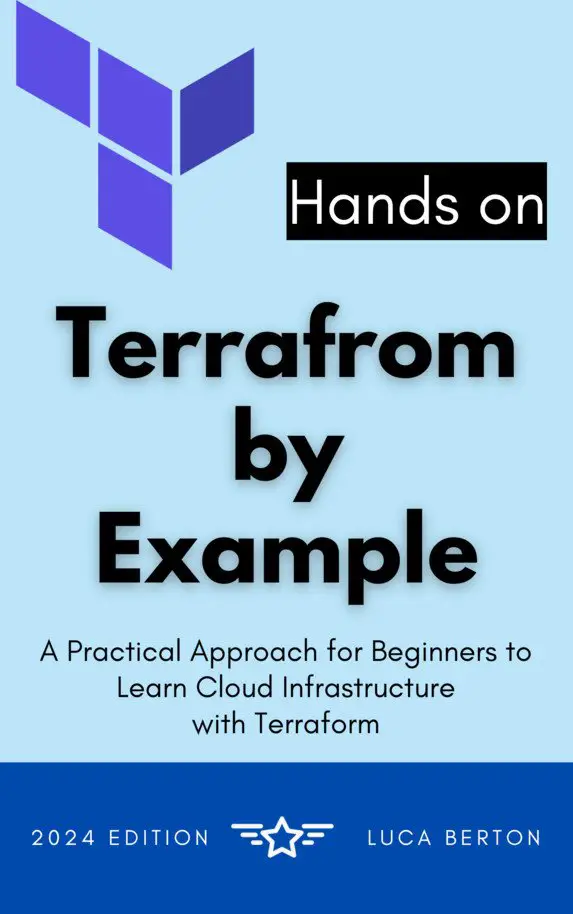
- Terraform By Example Book — Practical code examples for every concept
- Terraform Cheat Sheet — Quick reference for all commands and functions
- Official Terraform Documentation — The definitive reference
- HashiCorp Learn — Free official tutorials
Tips for Exam Day
- Hands-on practice is essential — Don’t just read, actually write Terraform code
- Know the CLI commands — Understand what each command does and when to use it
- Understand state deeply — Many questions focus on state management
- Read questions carefully — Multi-select questions tell you how many answers to pick
- Manage your time — ~1 minute per question, flag difficult ones and come back
- Focus on Terraform Cloud basics — You don’t need deep expertise, but understand the value proposition
Practice Questions
Question 1
Which command initializes a Terraform working directory?
- A)
terraform start - B)
terraform init - C)
terraform begin - D)
terraform setup
Answer: B — terraform init downloads providers, initializes the backend, and installs modules.
Question 2
What is the purpose of Terraform state?
- A) To store provider credentials
- B) To map configuration to real-world resources
- C) To store Terraform CLI preferences
- D) To cache downloaded providers
Answer: B — State maps your configuration to real-world resources, allowing Terraform to track what it manages.
Question 3
Which meta-argument creates multiple instances of a resource from a map or set?
- A)
count - B)
for_each - C)
depends_on - D)
lifecycle
Answer: B — for_each creates instances from a map or set, with each.key and each.value references.
Hands-On Courses
Learn by doing with interactive courses on CopyPasteLearn:
Conclusion
The Terraform Associate certification is achievable with dedicated study and hands-on practice. Use our course and book as your primary study materials, supplement with the official documentation, and practice writing real Terraform configurations. Good luck!